

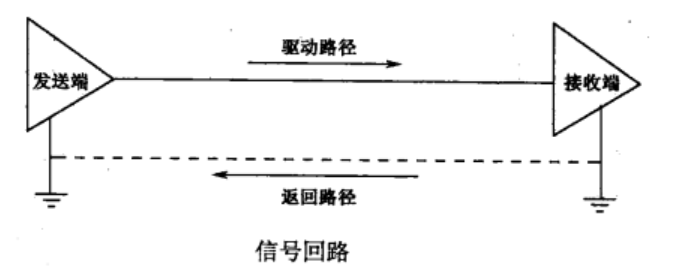
The Forgotten Physics: Fundamental Laws Governing Current Flow
Industry data reveals that 68% of EMI issues originate from improper return path design (IPC-2141A Appendix C). While engineers obsess over signal trace routing, Maxwell's equations—particularly the current continuity equation—remain overlooked:
∮<sub>S</sub> J·dS = -∂/∂t ∮<sub>V</sub> ρdV
This equation mandates closed current loops. At 10GHz speeds, where electrons travel at 1.2×10⁶ m/s (skin depth δ=√(2ρ/ωμ)), return path selection becomes mission-critical.
The Dual Nature of Modern PCB Design
-
Visible Architecture: Microstrip/stripline traces
-
Hidden Infrastructure: Ground plane "electron highways"
Chipmaker testing shows: Every 1Ω increase in return path impedance degrades signal rise time by 23% in 6-layer boards (validating transmission line theory):
Z<sub>loop</sub> = Z<sub>forward</sub> + Z<sub>return</sub> + jω(L<sub>loop</sub> - 1/ω²C<sub>loop</sub>)
Frequency Divide: Low vs. High-Frequency Return Path Selection
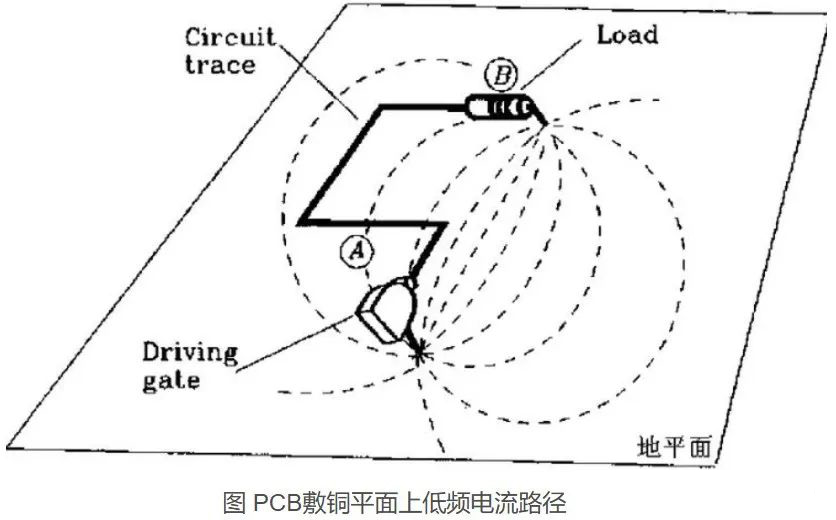
Low-Frequency Currents (f ≤1kHz): Resistance-Driven Paths
-
Rule: Minimize R=ρL/A
-
Case Study: Industrial PCB achieved 42% resistance reduction by doubling 12V plane copper weight (1oz→2oz).
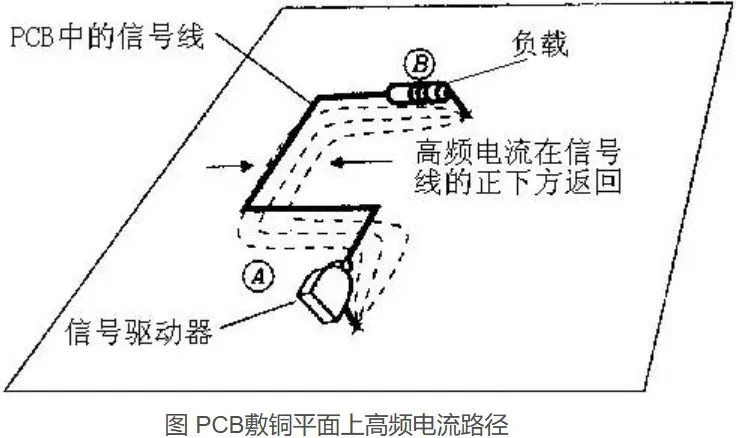
High-Frequency Currents (f ≥100kHz): Inductance-Optimized Routing
-
Rule: Minimize L=μ<sub>0</sub>μ<sub>r</sub>(l/w)h
-
Skin Effect: J=J<sub>0</sub>e<sup>-y/δ</sup>
-
Data: 90% of 10GHz return current flows within ±0.2mm beneath signal traces.
Three Cognitive Traps in Return Path Design
1. The Ground Plane Fallacy
Signal crossing GND-VCC-GND layers creates loop area:
A = (Δh × l) × n<sub>via</sub>
Result: 3.2nH parasitic inductance in DDR4 HDI boards, causing 18% timing margin loss.
2. Power Plane Segmentation Risks
-
1mm plane gap causes ΔZ=37Ω at 2.4GHz
-
Gigabit NIC case: 12mm detour → L≈0.5nH (calculated via μ<sub>0</sub>μ<sub>r</sub>(l/w)h).
3. Via Array Cascading Effects
-
Via inductance: L<sub>via</sub>≈5.08h[ln(4h/d)+1] pH
-
5G base station DDR4 routing:
-
+0.3nH/via → +1.7ps delay/via → 15% eye height reduction.
-
Four-Dimensional PCB Design Methodology
1. Layer Stack Optimization
| Signal Rate | Reference Plane | Max Spacing |
|---|---|---|
| <1Gbps | GND/PWR | 0.3mm |
| 1-5Gbps | Adjacent GND | 0.15mm |
| >5Gbps | Dual GND | 0.1mm |
2. Cross-Split Remediation
Stitching capacitance:
C = (N×ε<sub>r</sub>ε<sub>0</sub>A)/d
PCIe 4.0 implementation: 0402 100nF arrays reduced noise by 26dB.
3. 3D Return Path Analysis
HFSS simulations: Optimized paths improve S21 by 0.8dB@28GHz.
4. Manufacturing Compensation
Copper roughness loss:
α<sub>rough</sub> = 8.68(πfμσ)<sup>½</sup>[1+2arctan(R<sub>q</sub>/δ)/π] dB/m
RTF foil reduces insertion loss by 15%.
Next Frontier: 56Gbps PAM4 Challenges
112G SerDes requirements:
-
ΔZ<±5% impedance continuity
-
<0.05UI interlayer skew
-
tanδ<0.002 dielectric loss
LCP substrates reduce return path loss to 1/3 of FR4, signaling material revolution.
Conclusion
In the 5G mmWave and AI chip era, return path design evolves from necessity to survival. Master engineers don’t just route traces—they architect electrons’ homeward journey. Your layout decisions today determine EMC compliance tomorrow.
Engagement Prompt
Share your most perplexing return path "ghost stories" in recent designs! Our PCB experts will analyze selected cases.